
Upper Dublin Resident Lookup Records
Official sources are most useful when each is kept in its lane. Montgomery County Property Records can locate an address or parcel, but its owner-name search was removed. The Recorder can identify a party to a recorded document and its date. Court, marriage, probate, voter, and state credential sources each answer narrower questions. A resident lookup therefore works best as a comparison of independently dated records, not as a single name search or a claim about everyone in a household.
| Record | What It Confirms | Where | Access |
|---|---|---|---|
| Property record | Address or parcel association and assessment context | Montgomery County Property Records | Free address or parcel query, not owner-name search |
| Recorded document | A party role, instrument type, and recording date | Recorder Public Access System | Account required; images have subscription, counter, and mail routes |
| Court docket | Caption, participant, court, filing date, and status | Pennsylvania UJS Case Search | Public index with important exclusions |
| Marriage or estate record | Marriage names or estate roles and dates | Montgomery County Register of Wills | Custodian viewing, request, archive, or public-access route |
| State credential | Formal licensing status | Pennsylvania PALS | Live board-specific verifier |
When an address is known, begin with the parcel ID and township label, then compare a Recorder result by party, date, and legal description. When a name is known, choose the record type that fits the question rather than forcing the name into the assessment portal. A property card is not an occupancy roster, and a document party is not automatically a current resident.
Note: Keep the document number, docket number, parcel ID, or certificate reference with every result so the custodian can identify the exact record later.
Confirming an Upper Dublin Resident
Use two records that independently connect the same person to the same period. Start with a known Upper Dublin Township address in the county property system, confirm the parcel on the interactive tax map, then examine a Recorder document using the address, parcel, party, or document criteria. A recorded deed establishes a recorded transaction. Its grantor and grantee roles, legal description, document number, and date are the details that make the next check meaningful.
- Normalize the address with its parcel ID, postal place, and township before comparing names.
- Search the Recorder for a document tied to that parcel or a known party, then save the party role, recording date, and document number.
- Use a court, marriage, estate, or controlled voter route only for a separate fact that matches the same period and identity.
- When the source matters, request a copy or ask the named custodian about the specific record rather than seeking every file about a person.
A same-name match needs more work. Compare full and middle names, variants, approximate age or date, municipal address versus postal place, spouse or heir name, party role, legal description, and the office reference number. A newer entry can still concern another person. Record what each source proves and the date it speaks to.
- Docket
- A court’s running case record, identified by a docket number and usually showing filings, events, parties, and status.
- Index versus image
- An index helps locate a record. An image or filing is the underlying document and may have separate access or copy rules.
- Certified copy
- A copy issued and authenticated by the custodian for the purpose allowed by that office’s rules.
Upper Dublin Court Record Checks
The Pennsylvania UJS Web Portal is the statewide public starting point for docket sheets, calendars, and case information. For a participant search, its public guidance recommends a first name, last name, and county, then narrowing an overbroad result with County, Case Status, or Court. Choose Montgomery when the record is county-filed, and select the court type that fits the matter rather than assuming one screen covers every county filing.
| Participant search | Last and first name are required for a person search; partial, case-insensitive entries are permitted. |
|---|---|
| Useful narrowing | Court Type, County, optional MDJS Court Office, participant type, date of birth caution, and Case Status. |
| Other modes | Docket Number, Date Filed, and Calendar Event searches use their own date and event controls. |
| County civil route | The Prothonotary Civil Viewer shows docket entries without charge; pleadings have published per-page viewing charges. |
View the official UJS Case Search entry screen before entering the narrowest available search terms.
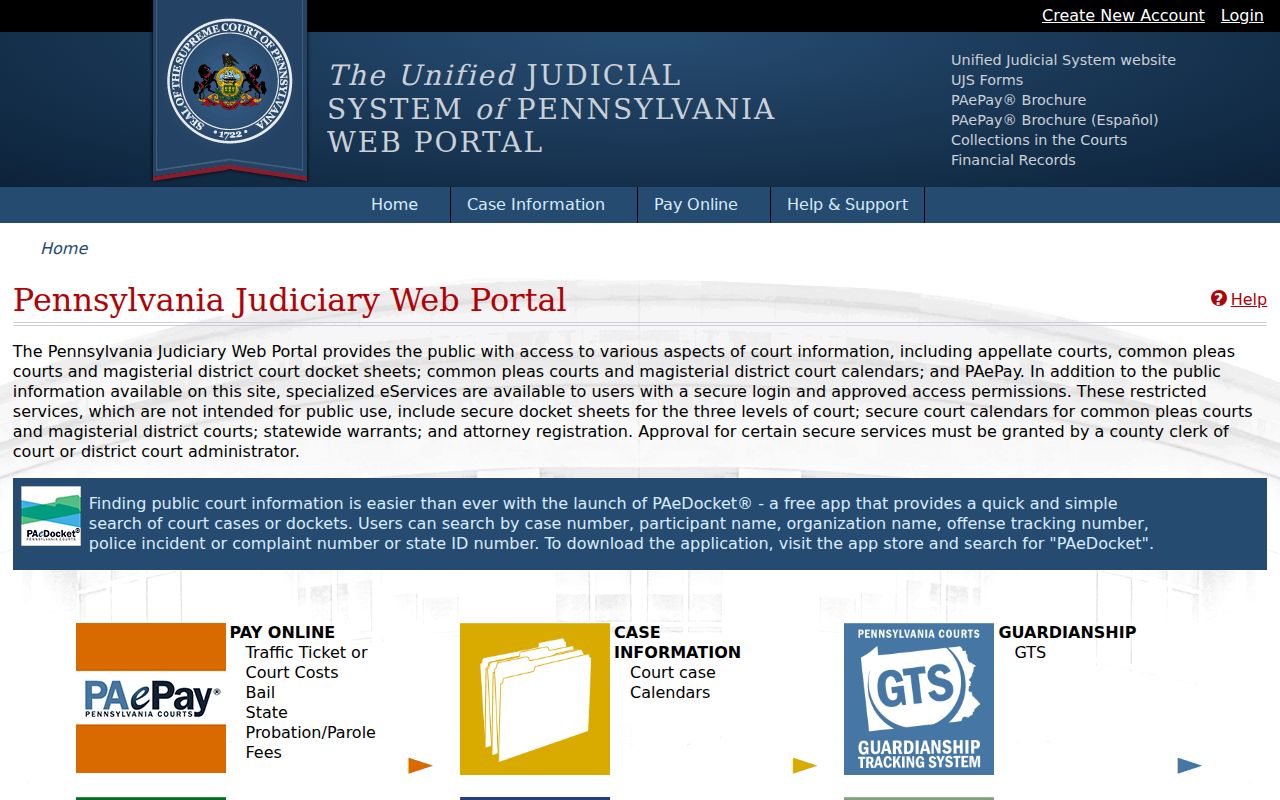
The statewide portal helps identify a court record to verify with the correct clerk or division.
Use the UJS public Case Search help for the portal’s stated search and docket guidance.
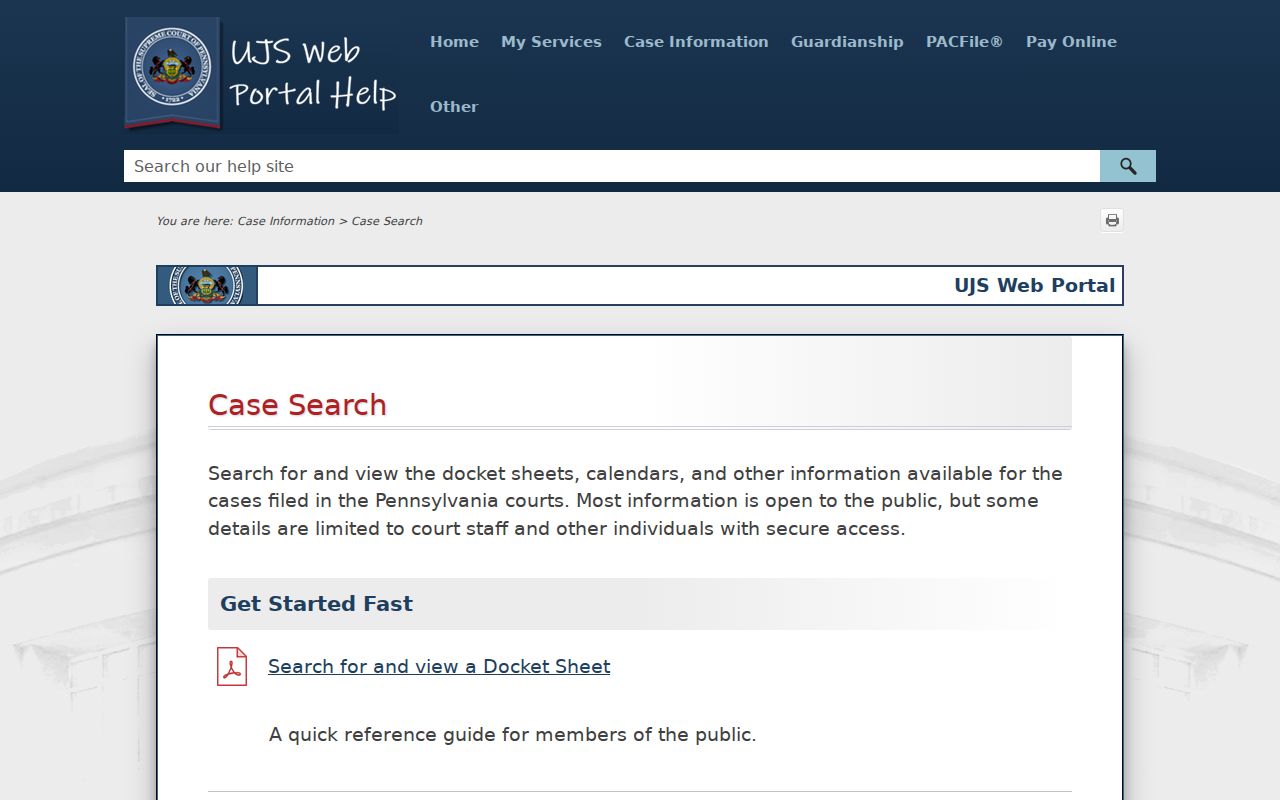
The help material supports a limited search, then a comparison of docket, caption, court, and filing date.
Upper Dublin Docket Record Limits
A returned UJS result can show a docket number, court type, caption, case status, filing date, primary participant, and in some records a limited birth-date field or plaintiff number. A docket-sheet control may open a printable docket. The result is a locator, not identity proof and not a promise that every filing or document image is available.
UJS specifically warns that juvenile cases, civil Common Pleas cases, expunged or pending-expungement matters, sealed cases, limited-access cases, and records destroyed under retention rules may be unavailable. A correct name with no hit does not prove that a person has no record. For a Magisterial District Court paper record, contact the relevant office; for civil filings, the Prothonotary is the appropriate county clerk route.
The Montgomery County Prothonotary is the county’s civil-record access channel when a docket result needs a clerk-level follow-up.
Upper Dublin Vital Record Routes
Vital research depends on the record type and era. Pennsylvania birth records become public after 105 years and death records after 50 years under the Vital Statistics Law. The state’s Division of Vital Records handles current birth and death certificates, while historical index and archive paths may be better when a noncertified historical copy is enough. Montgomery County marriage licenses issued from 1885 to the present are open for public viewing through the county custodian.
Birth and death certificates from the current state process have eligibility, identity, and fee rules. The Department of Health says it does not allow people to search its held records themselves. For historical research, use the state index to identify a certificate and choose the archive route or current certified route that fits the purpose. County Archives and the Register of Wills provide additional pre-statewide-registration and county-era leads.
Open the Pennsylvania birth-certificate page to review the official request route and requirements.
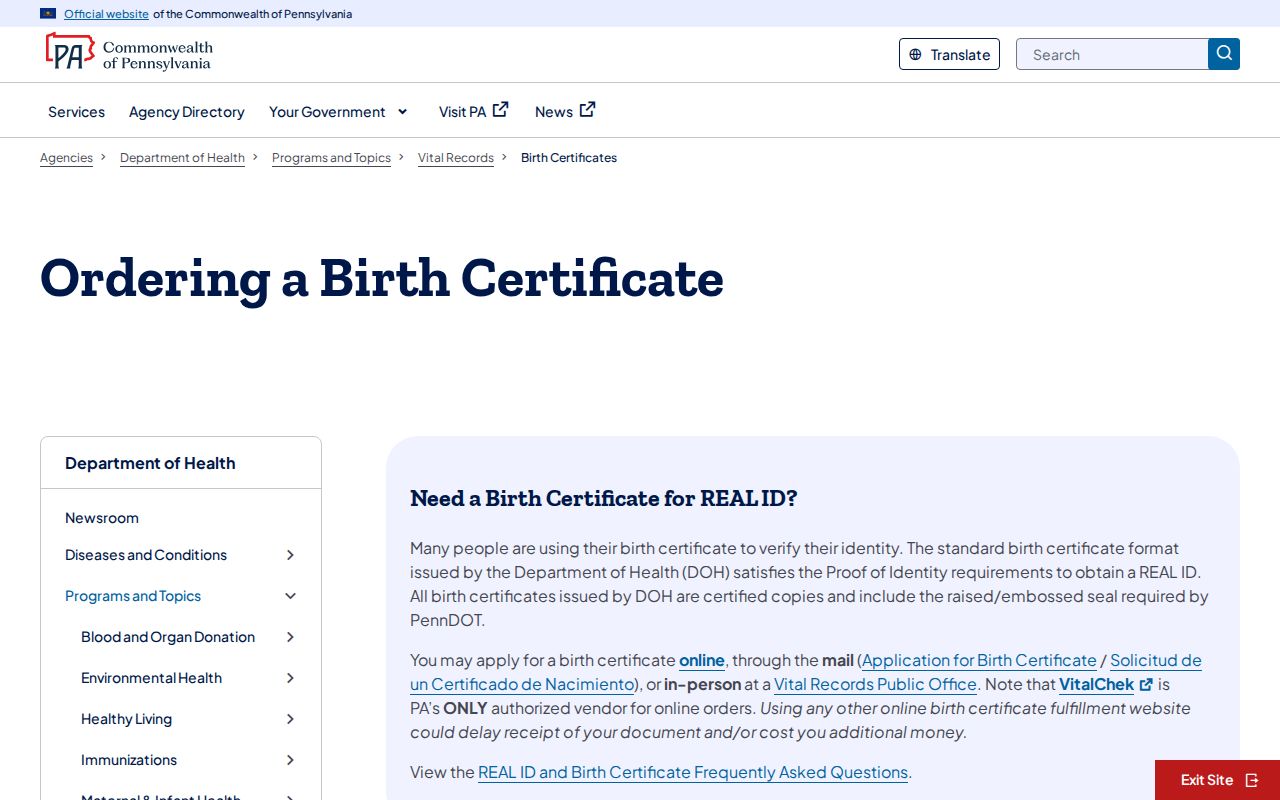
A current certificate request is distinct from a historical index search, even when both concern the same person.
Upper Dublin Voter-Record Requests
Pennsylvania’s Check My Registration Status tool is a self-service status check, not a public browser for Upper Dublin voters. Montgomery County Voter Services has a separate written form for defined public information, including a Street List and individual voter information. The form requires a government-ID photocopy, qualified registered-elector status, a signature, and the statutory affirmation described on the form.
The Street List can show voter name and residential address for the requested street, but it does not establish every person living there, a current household roster, or ballot choices. The form says internet publication is prohibited under the cited regulations and provides mail and email channels for the request. The county states a ten-calendar-day response instruction after receipt unless another law applies.
Visit the official Pennsylvania voter-status form for an individual’s self-service route.
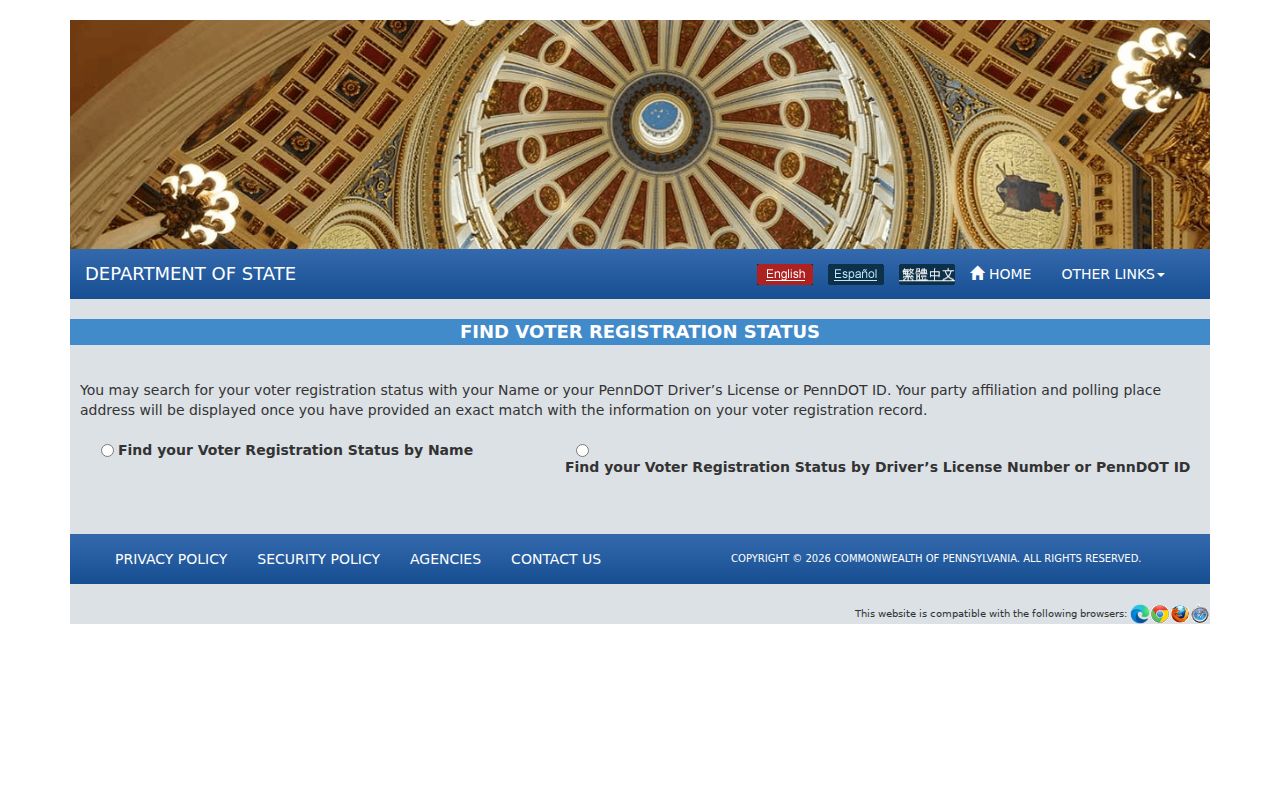
For any county list request, use the controlled county procedure rather than treating this form as a public resident directory.
Upper Dublin Credential Record Checks
Pennsylvania PALS can confirm a board-specific professional credential and status. The Department of State cautions that new or changed information can take 48 hours to appear. It is a narrow check for a formal credential, not evidence of a person’s current Upper Dublin address.
The Department of State business search is similarly limited. It searches an entity by exact entity name or entity/file number, not by officer or owner name, address, business type, tax number, phone, or stockholder. A result may offer a formal affiliation to compare with another dated source, but it does not convert a business record into a resident record.
Use the official PALS verifier to check the live board record.

The result should be read for credential status and board information, then confirmed with the responsible board if needed.
Note: A business or credential result can support a dated formal connection, but it should never be treated as proof of a private home address.
Upper Dublin State Lookup Tools
The Pennsylvania Inmate and Parolee Locator is a state resource with its own scope. It should not be used to infer Montgomery County custody, because no official publicly searchable county jail roster was located in the research. County correctional-facility and court channels are separate when a county-specific question needs a custodian response.
Open the state locator only for the limited state custody question it is designed to answer.
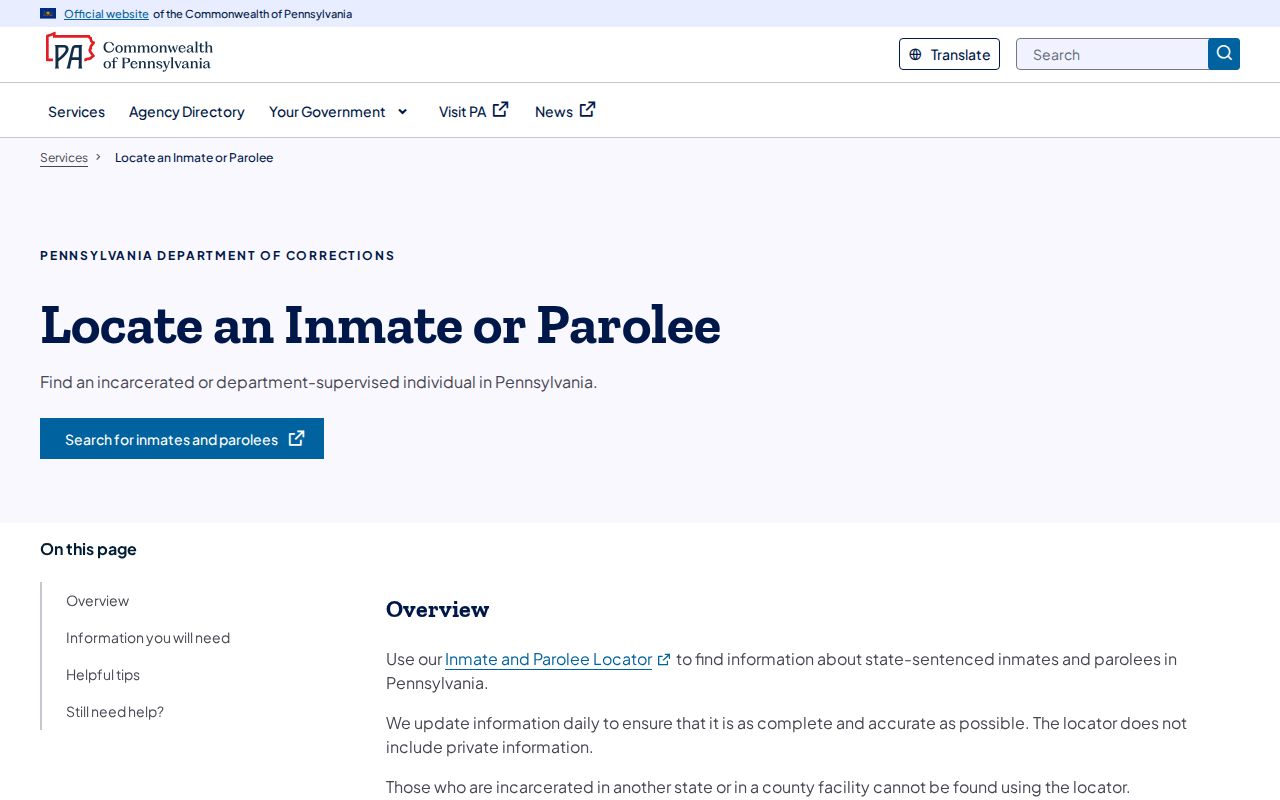
The locator is not a substitute for a court docket, county custody record, or general resident lookup.
The Pennsylvania State Police Megan’s Law Public Website is another separately scoped state resource with a ZIP-search entry point. It is not a general identity or neighborhood roster, and protected-address limits still apply.
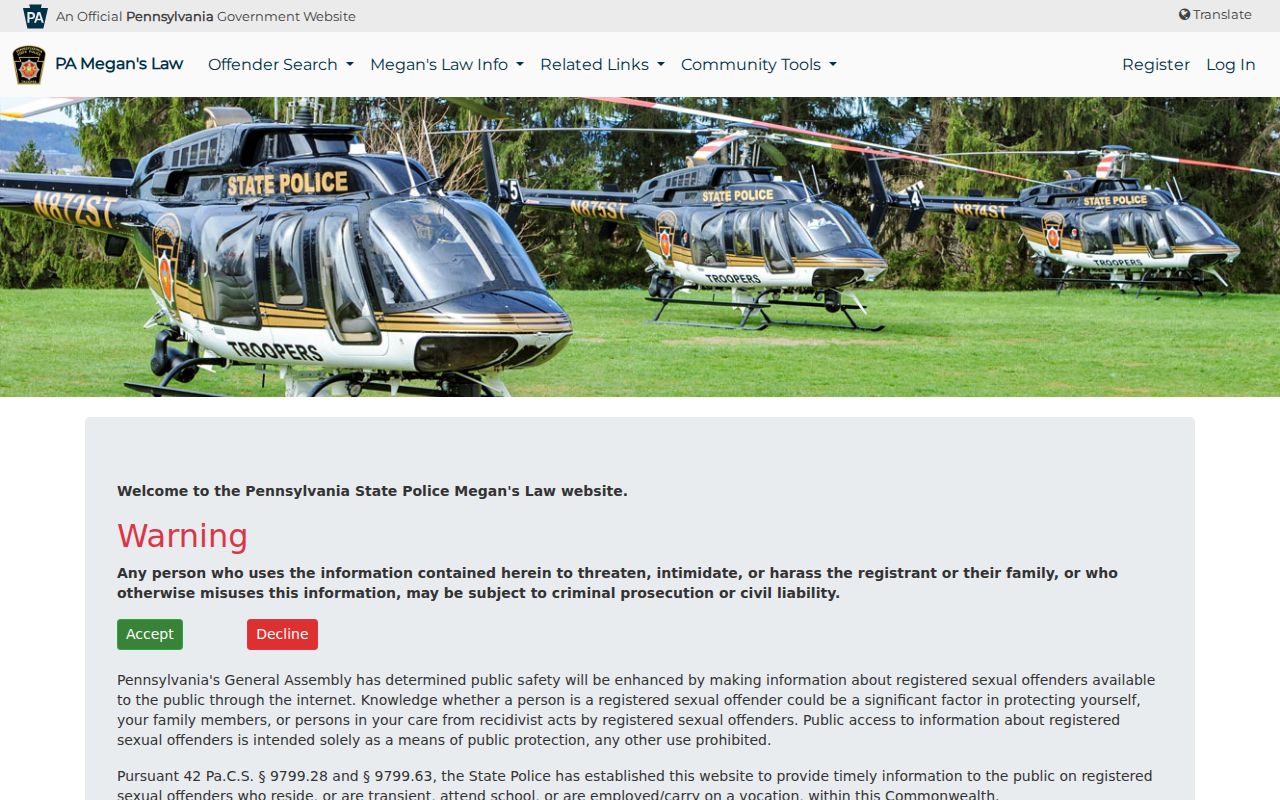
Use the state website’s terms and its own result limits rather than filling gaps with unrelated resident records.
Upper Dublin Resident Lookup Limits
Pennsylvania’s Address Confidentiality Program gives eligible survivors a substitute mailing address for covered government records. It is part of a safety plan, does not erase historical records, and does not guarantee removal of every nongovernment trace. The township’s Right-to-Know materials also list personal identifiers, minors’ information, certain home addresses, investigation records, and other protected material that a broad request will not obtain.
Correct information at its origin. Assessment questions go to the Board of Assessment Appeals. A recorded-deed name change generally requires a new corrective document, not an edit to the existing recording. Court corrections follow court process, voter changes go through election procedures, and vital amendments go to the Department of Health. A township RTKL request is a route for a specific non-exempt administrative record, not a shortcut around those limits.
Lawful use. Use Upper Dublin Township records for lawful personal, family, estate, civic, or safety research. Do not use any result to stalk, harass, intimidate, or harm another person.